A lazy bonjour from the capital of relaxedness, Vientiane. That's right, I'm currently in the tiny, clean, nothing-do-here and biggest city of Laos. If it wasn't for some of the familiar old faces that I've seen, it could also been have a “boring” place. But I don't want to slam that adjective on this picturesque town too fast. It has it's charms, like walking down the banks of the Mekong river, or checking out the old, rundown French colonial buildings. As long as you don't overextend your stay.
It's so relaxed that this entry is going to be a short one, because yours truly can't really be bothered to write anything long or complicated. And, to be honest, nothing really interesting happened the last time we saw each other. So, sorry for the lack of pictures.
Funny enough, I haven't seen anything new after I left the endangered dolphins of Kratie in northern Cambodia. Sure, I spent a couple of days in Siem Reap (again), and yes I traveled through a bit of unexplored part of northeastern Thailand also called Isan country (but there was nothing really there). I was essentially biding my time to cross over into Vientiane and Laos proper. It's a long and boring story, but lets just say it was a matter of visa's and logistics and a bit of playing around with a calendar.
Now, on to the juicy bits. Interesting times lay ahead people, and probably I won't be able to find a decent internet connection in the next two weeks. Me and fellow Cambroadian Brittan decided (after some good advice from Tette, my Dutch friend that I met in Cambodia) to rent a motorcycle and just bugger off for an extended period of time into the northern part of Laos. We found a guy who was crazy enough to actually give us two bikes for a decent price. We have a map. We're planning to bring everything we have with us. It's going to be an interesting sight for the Lao in the countryside: two Western guys, buzzing along on two mopeds completely packed with backs and backpacks.
It's been a busy day today, scouring the main market of Vientiane for useful supplies like motorcycle gloves, waterproof tarp, mosquito nets and other bits and pieces. Tomorrow morning will try to leave early (which probably won't happen) and get as far as possible up the road. The route will take us deep into the mountains; who knows what we're going to see there. We'll try to go as far north as possible.
I'll try to keep everybody informed, but we might as well be entering a two week blackout from now on as far as I know. Adventure lays ahead. It's going to be an interesting ride indeed.
Au Revoir!
dinsdag 2 juni 2009

donderdag 21 mei 2009
Passing Through
Traveling is all about being flexible. I'll give you an example of a change of plans during my travels. My time here in Cambodia is almost up. My visa expires in a couple of days and I've to make sure I'll leave the country in time. Originally I was getting to head up north from Phom Pehn to a little town called Kratie and then to the border with Laos. Normally, at ever border crossing in the region, with the exception of Vietnam and China, you can get a visa on arrival. You just show up, with twenty dollars in your hand, and get a stamp in your passport. Well, that's what I thought. But, of course, the one border crossing Laos shares with Cambodia had to be the exception to the rule.

There is no problem travelling from Laos to Cambodia, but the other way – the route I was taking – you need to get a visa at the consulate or embassy beforehand. I found that out when I was in Kratie, next to the mighty Mekong river, home to the endangered Irridawy fresh water dolphins and halfway to the border. Great. What were my options? Or I go back to Phom Pehn, get to the embassy, wait three days and get a stamp, or I'll let someone else do it for me in Kratie (costs alot more) who will send by mail, or I'll take a completely different route. I chose option number three.
I still go to Laos, but I'll enter at the capital, Vientiane. That means I have to go through a bit of unexplored north-eastern Thailand. It also means I can visit Siem Reap (of Angkor Wat fame) and see some of my “old” friends. Travelling is about being flexible – the journey is the destination, right?

The most popular mode of transport for Western tourists (and a large number of Khmer) in Cambodia is, by far, the bus. In every major city the streets are lined with tacky looking travel agents. Most of the guest houses and hostels also arrange bus tickets, with the added bonus of a free pick-up at your hostel by a tuktuk. Tickets go from anything between five to fifteen dollars. For that price, you'll get a simple, reclining seat in an air-conditioned bus. Legroom is considered luxury.
Sometimes they'll serve you cold water, little pastries or other snacks. Some even have proper, working toilets on board. Most of the buses stop regularly, sometimes every hour, so you can stretch your legs or get a cold drink. Unfortunately, except for the “VIP” buses, the ordinary coaches also stop for every paying passenger on the side of the road. The journey takes a lot longer this way; when they say it takes five hours, you'll arrive there in eight.

Oh, but you haven't heard about the best part yet: every bus – and that's every single one of them – has a TV on board, with the volume completely turned up, and with Khmer music video's playing the whole trip long. In the so called karaoke video's the guys “sings” about a girl and about love. No exception. The only thing that changes is the scenery. In one the action takes place on a farm, with water buffalo's in the background, the singer and his girl in typical farmer outfits. In the next their in a trendy modern apartment, with plasma TV and expensive wine, and smart looking suits and beautiful dresses. The story is always the same.
Then you have the Khmer stand-up comedy shows: these are really, really, really unfunny. The shows are always “live” recordings. One guy on the very basic stage makes the jokes, the other one is always the simple guy that gets hit or chased once in a while. They stand there, talk, and after a minute comes the “punchline” - literally. The Khmer love it.

The only redeeming feature of the TV on board the bus, is that they sometimes show really bad Chinese kungfu movies from the seventies. They overdub it in Khmer, but some of them have English subtitles and, to be really honest, the acting is so bad, stories utterly crap (there's always the wise, grey haired martial arts master who kicks everybody ass) and the action so convincing unrealistic, they actually get to be a lot of fun.
I've spent hours and hours in the bus. My head resting on the window, looking out, trying to block out the blaring Khmer music. Sometimes I sleep. When I wake, I see the flat countryside, the rice paddies glistening in a thin filter of water gliding past. You can see a long way, past the isolated clusters of palm trees, the water buffalo's, the simple wooden huts on stilts. On the horizon big, fat, white clouds pass by. These lands flood regularly during the rainy season.
The paved road on the dike ends, and the bus starts bouncing and shaking on the sand and mud track. People walk by. They're farmers with colourful chequered kroma scarves around their neck or waist, some on bicycles balancing wicker baskets full with little, screaming piglets. Others zoom past on their rickety, Chinese made motorcycles. Some of the bigger houses have billboards in front of them. They're political signs, denoting where, probably, a big party chief is living. Most, maybe all, says Cambodian People's Party. Other political signs you see far less.

They say this country is a democracy. It isn't. The Cambodian People's Party has been ruling the country for the last sixteen years. The political party is a continuation of the same government that was put in power by the Vietnamese after 1979. The big chiefs are all ex-Khmer Rouge, soldiers and civilians who fled the country into Vietnam during the murderous years of Pol Pot's. Other political parties, including the royalists, sprung up during the United Nations elections in 1993, but to no avail. Over the years the Cambodia's People Party got stronger, more corrupt and bend on taking all power. They cemented their control in a coup in 1997. They are more busy with filling their own pockets, than with rebuilding the country and helping the people.
Things are not a lot better now. Non-governmental organisations run the country. Corruption is everywhere. Poverty too. Large pieces of prime real estate are sold en mass by the government to foreign companies and investors. People living on the land are kicked off, their houses bulldozed, to be turned into resorts or casino's. I've never seen such a blatant sell-out before.

Almost all the Cambodian tropical islands in the Bay of Thailand, close to Shinoukville are in private hands. A little bit inland, close to the town Kampot, a complete national park, famous for it's view on top of a hill, is now being converted by the Chinese into a casino and resort. The park is closed for visitors. In Phom Pehn, a huge lake and popular tourist attraction in the center of the city with dozens of guest houses and restaurants lining the shores is in the process of completely being filled up. A Korean consortium will build hotels, casino's and a resort on the reclaimed land, ruining dozens of lives and putting a lot of Khmer owned enterprises out of business.
I close my eyes and drift away into a half sleep you always have on busses and trains. I have a great sense of passing trough. I see elephants drinking water, and I'm driving on the back of a mototaxi through a raging thunderstorm. Other images follow: children smiling and waving, cows lying down and dozing off on the side of the road, the red clay and dirt of the roads, people buying little bags of crickets and cockroaches as a snack, boulevards of Phom Pehn, a fleeting glance of a dolphin in the Mekong river.

When I wake I'm in Siem Reap again. The sun is low on the horizon, but it is still hot. The glare makes me close my eyes and in the back of a tuktuk the breeze blows through my hair and cools me down. We pass a market on the side of the street. Strong smells invade my nose: wood fires, the cooking of rice and chicken and other meats, the spices and fruits, exhaust fumes from the dozens of motorcycles. Scurvy dogs run between the crowds. People barter, and shout and laugh. The sun slowly dips below the horizon.
This country is far from perfect. But I'm not at all unhappy to be here.
woensdag 13 mei 2009
Angkor What?
Today, I can honestly say for the first time, it sucks to be in this region in the “hot” season. I've had really warm days before; I've been sweating my ass off in Thailand on numerous occasions and in Cambodia things are not much better, especially inland. But, most of the time, when this happened, I was out and about, running around during the hottest part of the day taking some snapshots of some temple in the jungle. I didn't mind. The shade and a cool drink were always there at the end of the day. This time it's different.
I'm currently staying in Phom Phen, after spending (read my previous entries to see what happened during that time) two and half weeks with the Cambroadians. We went from Shinoukville, to Phom Phen, to Siem Reap and then with only Tette, we took a eight hour boat ride across the lake to Battambong and then back again to the capital.
 Today is my first day on my own again. And it's terribly hot. Cities in the tropics have that exasperating effect. It started with the rain around eleven – one moment the sun is shining, the next it's pouring. The rain falls in big, heavy and fat raindrops. Within seconds your soaked. Muddy puddles form immediately; there is not proper drainage underneath the paved roads. Just as suddenly it started, it stops raining. The sun comes back, pounding the pavement with it's unmerciful rays. And then the humidity kicks in. Even sitting in the shade, a fan on full power and next to a lake – big bodies of water become natural places of refuge from the heat – I can't stop sweating. No breeze. No escape.
To be really honest – this is not the worst heat I ever had. That was in Angkor Wat, a couple of days ago. Angkor Wat, the pearl of Cambodia. Forget all the other temples, Buddhist wats and religious shrines from days long gone: the national symbol of the Khmer people is one of the most impressive sites I've ever seen. It rightfully deserves the title of 8th Wonder of the World.
 Angkor Wat refers to the biggest and best preserved temple, but people also use the name to denote the massive collection of various different temples spread out in kilometers of jungles and countryside. Roads crisscross from one temple to the other. Some of the places are thirty kilometers away; you need to hire a tuktuk or rent a bicycle to properly explore Angkor Wat. If you want to rush you can do it in a day, but if you want to chill out a bit a three day pass is a much better option.

 Checking out the temples with these kinds of temperatures and high humidity, and a hangover, is just asking for trouble. On our last day in Angkor Wat proper, it was unbearable. Three hours spending in the jungle, and all your clothes were completely wet from the sweat. Luckily nothing serious happened, but we had to get back a bit earlier, to relax for a bit, because everybody was almost falling over from fatigue and close to heat stroke.
 If Angkor Wat is the Wonder in the official tourist slogan of Cambodia (“Kingdom of Wonder”), then the Killing Fields and the horrors of the Khmer Rouge is the dark side, the “other wonder” of this poor and complicated country.
Just a quick history lesson: Cambodia has been in trouble from 1970 onwards. First, after the army commander Lon Nol deposed of the authoritarian king Shinaouk in that year, the country was plunged in a war against the Vietnamese Vietcong and Cambodian Communists (that were using the remote border regions as a base for attacks against American troops in South Vietnam). The Lon Nol regime lost against a far more superior adversary, that at one point got the name Khmer Rouge (Red Cambodians). The Americans supported the Lon Nol regime with substantial military aid and massive bombing raids using the infamous B-52 bombers, to carpet bomb the countryside.
 In 1975 the Khmer Rouge captured Phom Phen and ordered everybody out of the capital. Year Zero had begun. Everybody was forcefully relocated, all money was abolished, education was prohibited – the whole country went into isolation. Kampuchea – new name for Cambodia – was going to be the great Marxist-Maoist experiment. No more social classes, no more poverty. All of the population had to grow rice, but techniques were medieval and working hours barbarous. Most of the food was used to buy military equipment from the big provider China, the rest went to the leadership. Just a tiny bit was reserved for people themselves. Soon there was starvation.

 I see I grossly overshot my own imposed word count with my little history lesson. I'll talk a bit about the current state of affairs in Cambodia in the next installment. What happened after 1979 and how things came to be, why the country is still poor and nothing really changed.
I want to end with the observation that the Khmer people are still very poor and the troubles of the past are still very much here. You don't see any old people on the street. Only youngsters. There are a lot of beggars on the street. One legged men selling books or cigarettes. Of course I visited the Tuol Sleng prison and the Killing Fields just outside the city. It's a very moving experience. But maybe it's better expressed in pictures. To end on a happy note: here are two Khmer kids trying to "play" with a poor dog.
 Looking out over the lake, it is still hot but a bit more bearable. A slight breeze is picking up. On the horizon dark and black thunderclouds are forming. It is going to rain soon.
I'm currently staying in Phom Phen, after spending (read my previous entries to see what happened during that time) two and half weeks with the Cambroadians. We went from Shinoukville, to Phom Phen, to Siem Reap and then with only Tette, we took a eight hour boat ride across the lake to Battambong and then back again to the capital.
Today is my first day on my own again. And it's terribly hot. Cities in the tropics have that exasperating effect. It started with the rain around eleven – one moment the sun is shining, the next it's pouring. The rain falls in big, heavy and fat raindrops. Within seconds your soaked. Muddy puddles form immediately; there is not proper drainage underneath the paved roads. Just as suddenly it started, it stops raining. The sun comes back, pounding the pavement with it's unmerciful rays. And then the humidity kicks in. Even sitting in the shade, a fan on full power and next to a lake – big bodies of water become natural places of refuge from the heat – I can't stop sweating. No breeze. No escape.To be really honest – this is not the worst heat I ever had. That was in Angkor Wat, a couple of days ago. Angkor Wat, the pearl of Cambodia. Forget all the other temples, Buddhist wats and religious shrines from days long gone: the national symbol of the Khmer people is one of the most impressive sites I've ever seen. It rightfully deserves the title of 8th Wonder of the World.
Angkor Wat refers to the biggest and best preserved temple, but people also use the name to denote the massive collection of various different temples spread out in kilometers of jungles and countryside. Roads crisscross from one temple to the other. Some of the places are thirty kilometers away; you need to hire a tuktuk or rent a bicycle to properly explore Angkor Wat. If you want to rush you can do it in a day, but if you want to chill out a bit a three day pass is a much better option.Close to the complex is a nice and tidy town, called Siem Reap. It's the place where everybody stays. There some cool places where you can drink the night away. Including our favorite hangout : the Angkor What? Bar. The drinking hole where you can get a cool t-shirt, but not before you “earn” it by ordering two buckets (similar to jugs) of strong liquor. Unfortunately this happened more often than not. There is another lurking danger in Siem Reap. The heat. The temperature regularly hovers around 40 degrees Celsius.
Checking out the temples with these kinds of temperatures and high humidity, and a hangover, is just asking for trouble. On our last day in Angkor Wat proper, it was unbearable. Three hours spending in the jungle, and all your clothes were completely wet from the sweat. Luckily nothing serious happened, but we had to get back a bit earlier, to relax for a bit, because everybody was almost falling over from fatigue and close to heat stroke.If Angkor Wat is the Wonder in the official tourist slogan of Cambodia (“Kingdom of Wonder”), then the Killing Fields and the horrors of the Khmer Rouge is the dark side, the “other wonder” of this poor and complicated country. Just a quick history lesson: Cambodia has been in trouble from 1970 onwards. First, after the army commander Lon Nol deposed of the authoritarian king Shinaouk in that year, the country was plunged in a war against the Vietnamese Vietcong and Cambodian Communists (that were using the remote border regions as a base for attacks against American troops in South Vietnam). The Lon Nol regime lost against a far more superior adversary, that at one point got the name Khmer Rouge (Red Cambodians). The Americans supported the Lon Nol regime with substantial military aid and massive bombing raids using the infamous B-52 bombers, to carpet bomb the countryside.
In 1975 the Khmer Rouge captured Phom Phen and ordered everybody out of the capital. Year Zero had begun. Everybody was forcefully relocated, all money was abolished, education was prohibited – the whole country went into isolation. Kampuchea – new name for Cambodia – was going to be the great Marxist-Maoist experiment. No more social classes, no more poverty. All of the population had to grow rice, but techniques were medieval and working hours barbarous. Most of the food was used to buy military equipment from the big provider China, the rest went to the leadership. Just a tiny bit was reserved for people themselves. Soon there was starvation.Not long after, Pol Pot (“Brother Number One”) and his leadership got increasingly paranoid and ruthlessly started hunting down anybody and everybody that were perceived to be dangerous. Former Lon Nol soldiers, teachers, educated people, journalist, “spies” from the KGB or CIA or archenemy Vietnam, poor farmers who got accused of stealing food or criticizing the party. In the end the Khmer Rouge started devouring itself – former ministers, military commanders, ambassadors, they, like so many before them, all got sent to the infamous Tuol Sleng prison. Tortured, made to confess to imaginary crimes, and then sent to their demise in the mass graves of the Killing Fields. This was happening in the whole country. But Tuol Sleng, in Phom Phen, was the most visible “prison”. Twentythousand passed trough the former school gates. Seven survived. 
One last piece of the puzzle is needed to explain why the Khmer Rouge lost. They started picking a fight with their neighbors and their sworn enemies – the battle hardened Vietnamese, who just won their epic fight against the US and reunited their country. Cambodians fear and hate the Vietnamese after hundreds of years of war, being conquered many times and having lost large parts of their once big kingdom (the same one that build Angkor Wat) to their “brothers”. After many raids, instigated by the Khmer Rouge, the Vietnamese hit back. First with a limited war. A year later, at the end of 1978 they went all out, and in early 1979 the Vietnamese conquered Phom Phen and had “liberated” the country.
I see I grossly overshot my own imposed word count with my little history lesson. I'll talk a bit about the current state of affairs in Cambodia in the next installment. What happened after 1979 and how things came to be, why the country is still poor and nothing really changed.I want to end with the observation that the Khmer people are still very poor and the troubles of the past are still very much here. You don't see any old people on the street. Only youngsters. There are a lot of beggars on the street. One legged men selling books or cigarettes. Of course I visited the Tuol Sleng prison and the Killing Fields just outside the city. It's a very moving experience. But maybe it's better expressed in pictures. To end on a happy note: here are two Khmer kids trying to "play" with a poor dog.
Looking out over the lake, it is still hot but a bit more bearable. A slight breeze is picking up. On the horizon dark and black thunderclouds are forming. It is going to rain soon.Till next time.
zaterdag 9 mei 2009
Cambroadians Ride!
Looks like my little English writing experiment worked better than expected. So, I'll try my and once more in this latest installment in the Great Escape. I promised in my previous entry that I would talk a bit about my adventures in Cambodia. Unfortunately I keep running out of time during my travels – I'm way too busy sightseeing, meeting new people, drinking and having fun. Sadly, one of the consequences is that I'm running behind with my blogposts. I'll try to catch up a little bit – but bear with me.
In this one we go way back in time, two weeks to be exact – a lifetime while traveling – to a little beach side city called Shinoukvile in the south of Cambodia. In the two weeks separating then and now, a lot has happened and I experienced traveling in a totally different way. This post is about a extraordinary group of young people, yours truly included, who decided to hang out together and have a memorable time. Which we certainly did.
In this one we go way back in time, two weeks to be exact – a lifetime while traveling – to a little beach side city called Shinoukvile in the south of Cambodia. In the two weeks separating then and now, a lot has happened and I experienced traveling in a totally different way. This post is about a extraordinary group of young people, yours truly included, who decided to hang out together and have a memorable time. Which we certainly did.

It started as just another day in just another new place in a exotic locale. Shinoukville is the biggest town on the coast and functions as a important transport hub with it's deep sea harbor. The coastline of Cambodia is otherwise largely deserted with few towns and villages worth mentioning and with long stretches of secluded beaches, swamps, mangrove forests and other nature. Fortunately Shinoukville – named after the once monarch of Cambodia, king Shinouk – has the reputation of a party town and there are lots of tourists, guest houses, bars and restaurants dotting the narrow beach front.

Traveling alone means that sometimes you have to do things – you guessed it – alone. Including sitting by yourself in a busy bar or club if you really have that craving for an Ankor beer. Funny enough, enjoying myself at one of the party clubs on the beach one day, I saw this bald, tall white guy dancing crazily. No fucking way, I thought. I recognized him as Tette, a guy from my home town that I haven't seen in six years and that was part of the same big friend group back then. What is the coincidence of meeting someone like that? It happens more than you think, I guess.
Anyway, we hooked up and the next day met some of the other people of the group he was with. Including his lovely girlfriend Rosalie, there were the cheerful Adam, always in for a laugh and a beer, and Chris, the good natured traveler. Both were from the United Kingdom. Also, we met Brittan – the Canadian animator / cartoonist who with his crazy imagination, wits and storytelling managed to make us all laugh on more than one occasion. Later two British girls joined us – Em and Sarah, to complete our group.
Anyway, we hooked up and the next day met some of the other people of the group he was with. Including his lovely girlfriend Rosalie, there were the cheerful Adam, always in for a laugh and a beer, and Chris, the good natured traveler. Both were from the United Kingdom. Also, we met Brittan – the Canadian animator / cartoonist who with his crazy imagination, wits and storytelling managed to make us all laugh on more than one occasion. Later two British girls joined us – Em and Sarah, to complete our group.

The best ideas happen when your drunk you might say. It happened to us anyway. One evening we were discussing the plans for the next day. One of the things we wanted to do was to hire mopeds and explore the countryside. Coupled with the size of the group, the amount of beer drunk and one of us had the brilliant idea to start a motorcycle gang (ala Hells Angels). Names were flying around, from Khmer Blur, to The Cambohemian's, but we finally settled on The Cambroadians.
Cambroadians: it coupled the best elements of the next day – bros (brothers or friends for the Dutch readers) and road. We made up hand signs, motto's (“Our destination is to get lost”) and were planning elaborate initiation rites (two persons drive around a roundabout, in opposite directions, drunk and full speed and the goal is to high five each other a certain number of times) and complex clothing styles (which actually included wearing a leather jacket, which is impossible in the oppressive heat of Cambodia). We were going to be the craziest moped gang (motorcycle gang would not be the correct term) in the whole of Cambodia would ever see. We would rule Shinoukville!
The next day, all the drunken banter of the evening before seemed immature, to never be taken serious. A funny conversation, but nothing more than that. We were wrong.

Off we went, on our hired mopeds. We met a random guy who splashed in a swamp, to climb a tree, pull a live snake out of it, swim back with the snake in his hands and show it to us, before walking of. We just met the guy with the biggest balls, we all said. Somehow, along the way, after swimming in waterfalls and falling off our mopeds, driving around dusty roads, or going full out on the few paved roads, we became Cambroadians. (The two British girls didn't hire a moped and rode as passengers – they were momentarily called the Camroadians, roadies) The next couple of days, to our own great amusement, we started calling ourselves the Cambroadians. Nobody we met understood, and at one point we stopped explaining, but we had a great laugh.
And so it came to be. We traveled as a group from Shinoukville to the capital Phom Phen. Unfortunately some of us had to go their own different ways. We said our goodbyes. A smaller group traveled onwards to Siem Reap, where I'm writing this story as we speak. The day has come close that almost everybody is gone. Soon I'll travel alone again. But no worries, there's always fate, and who knows what's going to happen. There have been crazier surprise meetings and coincidences right? 
I'll talk a bit more about the serious side of Cambodia in the next blog. The Kingdom of Wonder – a country that everybody loves, but also hates for the poverty and the corruption and for all the hurt from the past that still haunts it today. Next time I'll take you from the Killing Fields to Phom Phen to the beautiful temples of the amazing Ankor What.
But for now, enjoy the happy story of the Cambroadians. Hope you liked it.
Cambroadians, ride on!
I'll talk a bit more about the serious side of Cambodia in the next blog. The Kingdom of Wonder – a country that everybody loves, but also hates for the poverty and the corruption and for all the hurt from the past that still haunts it today. Next time I'll take you from the Killing Fields to Phom Phen to the beautiful temples of the amazing Ankor What.
But for now, enjoy the happy story of the Cambroadians. Hope you liked it.
Cambroadians, ride on!
zaterdag 2 mei 2009
U.R.A. Fever
Well, to think about it, it was bound to happen at one point or the other. I'm talking about writing in English instead of my native Dutch. It's been two months that I started travelling and a steadily climbing number of people started “complaining” that they couldn't read my blog. I know everybody is literally dying to read my stories and check the pictures, no matter what country or continent you are in. So, as a favour to them, and as a little experiment for myself, I'll do a entry in a language that I haven't written in in the last four years. It feels strange and unfamiliar, but I think I'll get the hang of it eventually. Hopefully the Dutch crowd back home won't have any troubles with it either.
I haven't been updating the website for some time now for a very simple reason: lack of inspiration. So I have to catch up a bit. Though I'm already in Cambodia, I'll tell about the final weeks in Thailand first. Just for clarity and easiness sake I'll do that in separate updates. The next one will come in a couple of days.
Anybody that wants to see the pictures, just navigate to the left sidebar to the little sideshow and click on it. That will open up a new window in which you can see all of the photographs that I took during the course of my travels.

After the Bangkok riots, I had to pack up and leave that city for a while. The political unstable situation during the Thai new year had been very exciting, but also very exhausting. I had to get away for a couple of days and regain some of that lost energy. Also, during the whole ordeal of violent protests and water fights, I actually managed to pick up a cold.
Mind you, this happened before the whole H1N1 flu epidemic swept the world – and all of the news headlines. I think travelling with a cold these days would be a lot more “interesting” to say the least. Sneezing, coughing and dripping snot in the back of a tuktuk in sweltering hot and humid weather, is not a very pretty sight or experience I can tell you. As far as the last reports go, my home country has been infected, but South-East Asia has not. The closest it got is Hongkong.
Which is a little bit worrying, I think, just because if the so called swine flu manages to lodge itself in a poor country like Laos or Cambodia, the consequences would be a lot more dire than in a western nation like the Netherlands. Most of the countries in this region are very poor and still don't have a proper healthcare system. A lot of people would first turn to homoeopathic and home-grown medicine which obviously wouldn't do a damn thing. Shamans, medicine men and town doctors afterwards; and they would only delay the inevitable. A proper doctor or hospital would be the last resort, but they are very expensive for the local population, or too far away. Waiting too long before seeking professional medical care would only allow the sick to infect more people. Before you know it, it's too late. A chilling thought.
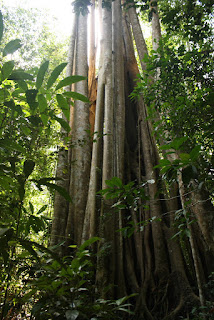 Like I said the last week I rested and recuperated in the north-east of Thailand, in a region called Isan. Which was cool, but to be really honest, the only thing of any interest I experienced during that time was a national park called xxx. I saw elephants, strange tropical birds, monkey's and something that looked like a deer. I trudged trough the thick and clammy jungle with special leech socks on. You have to put these white cotton socks over your real socks and lower part of your pants and tuck them in your trekking shoes to try to keep the little bloodsuckers out.
 I kid you not, after five minutes hiking around I had half a dozen of these small bastards crawling over my shoes and socks trying to get in. Which luckily they didn't. The jungle can be a scary place – lot's of bugs, big spiders and scorpions and other creepy crawlers around. It was a bit too much for one of our hiking party – an Italian girl – and every time she had one of the leeches on her socks she would start to scream and stamp her feet. Her face would turn white and she would panic, even if it was on a slippery and muddy hill. Everybody had to stop while her husband – rolling his eyes – hurried to her to clear the small black creatures away. Not surprisingly the trip took a lot longer then expected.

After spending almost two months in Thailand I felt I needed a change of scenery. So last week I crossed the border into the south of Cambodia. I took a bus to a place called Shinoukville, on the coast and one of the few big places in the south. It has a reputation of being a party town – which it lives up to - and I met a lot of cool people. Including a friend (Tette) from Leeuwarden that I didn't see for a couple of years.

The last couple of days we have been hanging around with a group of like minded individuals (Canadian, British and of course Dutch) and drink beer, hire mopeds and drive around, and in general be very lazy. Funny enough, everyone is travelling in the same direction: north. So tomorrow we're off to the capital Phomn Phen. I think I should leave at that and tell you all about Cambodia and the shenanigans of our little troupe in the next episode of the Great Escape.
Till next time!
I haven't been updating the website for some time now for a very simple reason: lack of inspiration. So I have to catch up a bit. Though I'm already in Cambodia, I'll tell about the final weeks in Thailand first. Just for clarity and easiness sake I'll do that in separate updates. The next one will come in a couple of days.
Anybody that wants to see the pictures, just navigate to the left sidebar to the little sideshow and click on it. That will open up a new window in which you can see all of the photographs that I took during the course of my travels.

After the Bangkok riots, I had to pack up and leave that city for a while. The political unstable situation during the Thai new year had been very exciting, but also very exhausting. I had to get away for a couple of days and regain some of that lost energy. Also, during the whole ordeal of violent protests and water fights, I actually managed to pick up a cold.
Mind you, this happened before the whole H1N1 flu epidemic swept the world – and all of the news headlines. I think travelling with a cold these days would be a lot more “interesting” to say the least. Sneezing, coughing and dripping snot in the back of a tuktuk in sweltering hot and humid weather, is not a very pretty sight or experience I can tell you. As far as the last reports go, my home country has been infected, but South-East Asia has not. The closest it got is Hongkong.
Which is a little bit worrying, I think, just because if the so called swine flu manages to lodge itself in a poor country like Laos or Cambodia, the consequences would be a lot more dire than in a western nation like the Netherlands. Most of the countries in this region are very poor and still don't have a proper healthcare system. A lot of people would first turn to homoeopathic and home-grown medicine which obviously wouldn't do a damn thing. Shamans, medicine men and town doctors afterwards; and they would only delay the inevitable. A proper doctor or hospital would be the last resort, but they are very expensive for the local population, or too far away. Waiting too long before seeking professional medical care would only allow the sick to infect more people. Before you know it, it's too late. A chilling thought.
 Like I said the last week I rested and recuperated in the north-east of Thailand, in a region called Isan. Which was cool, but to be really honest, the only thing of any interest I experienced during that time was a national park called xxx. I saw elephants, strange tropical birds, monkey's and something that looked like a deer. I trudged trough the thick and clammy jungle with special leech socks on. You have to put these white cotton socks over your real socks and lower part of your pants and tuck them in your trekking shoes to try to keep the little bloodsuckers out.
 I kid you not, after five minutes hiking around I had half a dozen of these small bastards crawling over my shoes and socks trying to get in. Which luckily they didn't. The jungle can be a scary place – lot's of bugs, big spiders and scorpions and other creepy crawlers around. It was a bit too much for one of our hiking party – an Italian girl – and every time she had one of the leeches on her socks she would start to scream and stamp her feet. Her face would turn white and she would panic, even if it was on a slippery and muddy hill. Everybody had to stop while her husband – rolling his eyes – hurried to her to clear the small black creatures away. Not surprisingly the trip took a lot longer then expected.
After spending almost two months in Thailand I felt I needed a change of scenery. So last week I crossed the border into the south of Cambodia. I took a bus to a place called Shinoukville, on the coast and one of the few big places in the south. It has a reputation of being a party town – which it lives up to - and I met a lot of cool people. Including a friend (Tette) from Leeuwarden that I didn't see for a couple of years.

The last couple of days we have been hanging around with a group of like minded individuals (Canadian, British and of course Dutch) and drink beer, hire mopeds and drive around, and in general be very lazy. Funny enough, everyone is travelling in the same direction: north. So tomorrow we're off to the capital Phomn Phen. I think I should leave at that and tell you all about Cambodia and the shenanigans of our little troupe in the next episode of the Great Escape.
Till next time!
donderdag 16 april 2009
Balaclava
Wat een spanning en sensatie zeg, de afgelopen dagen. Ik wist, toen ik vanuit het zuiden van Thailand terug naar Bangkok aan het reizen was, dat het een interessante tijd zou worden. Zoals sommige van jullie weten, is de afgelopen weken de politieke situatie in het land behoorlijk achteruit gegaan. De uitbarsting kwam, letterlijk en figuurlijk, afgelopen maandag, op de eerste dag van het Thaise nieuwjaar (ook wel Sonkarn-festival). 


Door de hele stad waren demonstraties, rellen, gevechten; de noodtoestand werd afgekondigd, een negatief reisadvies werd uitgevaardigd, toeristen moesten binnen blijven (wat natuurlijk niemand deed). Terwijl de hele stad in rep en roer was, vierden Thai en buitenlanders in de Khao San Road Sokarn, totaal niet bewust dat een paar straten verderop mensen gewond raakten en doden vielen. Sokarn is een waterfestival, waarbij iedereen elkaar nat maakt met emmers water en waterpistolen, en mensen een soort van modder in de gezichten van voorbijgangers smeren.

Leuk, maar vermoeiend. Ik vergelijk de festiviteiten maar met een zombiefilm. In de film kun je je huis niet verlaten omdat je dan wordt opgegeten door de hongerige ondoden die op straat rondzwerven. Die onmacht ervaar je ook met Sonkran: nergens ben je veilig, behalve in je hotelkamer, en een korte wandeling van vijftig meter is een ware martelgang waarbij je kletsnat en je gezicht vol met modder uiteindelijk aankomt waar je moet wezen. Met de wetenschap dat je het stukje opnieuw moet lopen. En de kennis dat dit de vierentwintig uur doorgaat. Drie dagen lang.
Efin, terug naar de rellen. Waar ik, natuurlijk als vakantievierende journalist, bij moest zijn.
Ik zal zo goed mogelijk mijn ervaringen tijdens die dag proberen te beschrijven. Ik wist van te voren dat de Thaksin-aanhangers (zie mijn vorige blogpost voor meer info), met hun rode kledij, door de hele stad verspreid waren. Op zondag wisten enkele antiregeringsdemonstranten een tweetal pantservoertuigen van het Thaise leger te “veroveren”. Vanaf toen ging het snel. Ze vielen de ministerie van Binnenlandse Zaken aan, de situatie ging van kwaad naar erger en de premier nam de beslissing om de stad met harde hand weer onder controle te krijgen.
Op goed geluk pakte ik in de ochtend een taxi naar de plek waar de pantservoertuigen waren aangevallen. Niets, op een paar soldaten na. Maar het viel mij wel op dat de straten uitgestorven waren en alle winkelcentra, restaurants en cafeetjes potdicht zaten. Grappig dat het openbaar vervoer nog wel steeds reed. Dus ik in de Skytrain (bovengrondse metro) op naar Victory Monument, een grote rotonde waar blijkbaar veel “red shirts” moesten rondhangen. Ik wist niet zeker of daar iets aan de hand was, maar de afgelopen dagen waren volgens de kranten wel grote demonstraties geweest. Wist ik veel dat ik mijzelf plotsklaps midden in een van de grootste rellen in de stad had gemanoeuvreerd.

Ik wist direct dat het fout zou gaan. Er hing een bepaalde spanning in de lucht. De gigantische rotonde was leeg. Een zijstraat was geblokkeerd door twee gekaapte stadsbussen. Een kleine groep voorbijgangers stond op een loopbrug een andere straat in te kijken. Deze straat was ook uitgestorven, met een paar bussen midden op de weg geparkeerd. In de verte, aan het einde waar de straat uitliep in een ander kruispunt, begonnen red shirts zich te verzamelen. Ik kon zo doorlopen. De eerste twee red shirts die ik zag, vroeg ik of het okay was om foto’s te maken en of ik de straat kon verkennen. “Geen probleem, maar het is niet echt veilig”, zeiden ze met een grote grijns.

Op dat moment zag ik ze nog niet goed, maar een honderd meter verderop, stonden de militairen paraat met machinegeweren, kogelwerende vesten, doorzichtige schilden en knuppels. De redshirts hadden maskers, balaclava’s en motorhelmen op. Ze waren ook bewapend: kapmessen, stokken, ijzeren staven, molotov-cocktails. Kleine brandjes werden gesticht. Een paar journalisten van buitenlandse media hingen ook rond; bepakt en bezakt met helmen op en vesten aan alsof ze in een oorlogszone rondliepen. Wat later niet ver van de waarheid bleek te zijn.
Ik hing een tijdje rond, maakte wat foto’s en sprak met wat red shirts. Steeds meer kwamen opdagen, met bussen, op motoren. De militaire linie, leek van een afstandje, ook steeds verder te groeien. Een ding wat ik nog herinner, is dat tijdens rellen, de beste (en meest veilige) positie voor een journalist achter de politielinies is.
Ik was nog geen minuut in de “veilige zone” toen ik erachter kwam dat het kruispunt waar de soldaten stonden aan twee kanten werd belaagd door de red shirts. De kant waar ik vandaan kwam, richting het Victory Monument, en rechts, de andere kant, op een brede weg. Toen gebeurde er heel veel dingen, heel snel achter elkaar.

Een waterkanon werd ingezet op een brandende bus. Toen probeerde blijkbaar een andere bus de linie van soldaten te rammen. De militairen gingen in de aanval over, begonnen in de lucht te schieten (met scherp) en voerden een charge uit. Sommige schoten gericht op de vluchtende betogers. Ik kan je vertellen dat het een oorverdovend lawaai is.

Toen de betogers verjaagd waren, rende ik weer terug naar de andere linie. Daar probeerde de betogers ook een bus als stormram te gebruiken. Deze ging een kleine brug op, die boven de militaire linie langs liep. Soldaten begonnen op de onbemande bus te schieten die de vangrail in schoot en bijna op het kruispunt daar beneden tuimelde. Toen werd ook de aanval richting Victory Monument ingezet, wederom met veel geweerschoten, traangas en geweld. Na de charge begonnen alle soldaten te juichen, en een paar lokale bewoners die voorzichtig om een hoekje kwamen kijken, applaudisseerden. Het hele spektakel duurde nog geen heel uur.

Jammer genoeg hielden de batterijen van mijn camera er toen mee op en, omdat ik dacht toch niet meer informatie op de straat kon inwinnen, ben ik weer terug gegaan naar dat andere, grote gevecht op de Khao San Road. Naar later bleek, waren maar een paar mensen tijdens deze rel gewond geraakt. Het aantal slachtoffers was aan het eind van de dag rond de 120 gewonden en twee doden. Het leger had laten zien geweld niet te schuwen en resoluut op te treden tegen de demonstranten. De protestleiders schrokken daar zo van, dat ze de volgende dag hun volgelingen opriepen de laatst over gebleven demonstratie- en tentenkamp nabij de Government House te ontmantelen en naar huis te gaan.
Een grote overwinning voor de huidige premier en de regering, en veel gewone Thai zijn ook blij. Eindelijk kunnen ze zich weer vrijelijk door Bangkok begeven, geen rellen meer of blokkades van belangrijke verkeersaders. En eindelijk kunnen ze doen waar ze echt zin in hebben: met hart en ziel op Sonkarn storten.
Dit stukje is naar internetmaatstaven veel en veels te lang. Als allemaal niet te behappen was, kan je ook altijd gewoon de spetterende foto’s bekijken. Tot weerziens!
zaterdag 11 april 2009
A Beautiful World
“My my my, it’s a beautiful world”, zoals de Australische zanger Colin Hay dat zo mooi zingt. A beautiful world indeed op dat kleine, bijna verlaten eilandje van Koh Payam aan de westkust van Thailand. De afgelopen anderhalve week heb ik daar heerlijk lekker niets mogen doen. Ik had het geluk bij aankomst op het uitgestorven stukje aardkloot een klein hutje aan het strand te bemachtigen en aldaar heb ik mijn tijd prinselijk versleten. Elke ochtend vroeg wakker worden en een duik in de zee nemen en dan de rest van de dag in mijn hangmat lezend en luierend doorbrengen. Misschien aan het eind van de dag, een uurtje voor zonsondergang, een stukje wandelen naar het impromptu volleybalveldje even verderop en daar een potje meespelen. En elke avond op zoek naar een feestje waar de misschien in totaal dozijn medereizigers zich naar alle waarschijnlijkheid ook zouden bevinden. Zo lui heb ik het gemaakt, dat fotograferen erbij ingeschoten is.
Voor een of andere reden heeft het massatoerisme zijn lasterlijke tentakels nog niet uitgespreid over Koh Payam of de vele verlaten eilandjes in de buurt. Misschien heeft het te doen met het feit dat het in vergelijking met al die andere, welbekende, stukjes paradijs in Thailand net iets minder hemels is. Te dicht in de buurt van Myanmar (sorry Birma). Het zand is net niet wit genoeg, de zee niet helder. Misschien te weinig palmbomen. Mogelijk te primitief.
Want de tijd lijkt op Payam stil te hebben gestaan. Er zijn geen auto’s, alleen maar scooters en brommers, geen pinautomaten, banken of supermarkten, wegen, televisie of warm water en riolering. Behoeftes worden in de, nu welbekende, figuurlijke gat in de grond gedaan en doorgespoeld met een emmertje water. Het eilandje is een klein hospitaaltje en schooltje rijk, op een bevolking van vijfhonderd zielen. Plus, er is geen noemenswaardige aanwezigheid van de politie (wat weer tot effect heeft dat men zich geen zorgen hoeft te maken over het nuttigen of in bezit hebben van geestverruimende drugs).
Het regende ook vaak. Bijna op de klok af elke namiddag een uur of twee. Een dag was geheel zonnig. De hele dag daarna stormde het. Misschien is het ook wel te rustig. Weinig te doen, weinig restaurants en bars nog open zo laat in het hoogseizoen; sommige mensen kunnen niet tegen de leegheid en de luiheid. Anderen, zoals ondergetekende, vinden het heerlijk. De locals adverteren Payam als het Koh Samui van de jaren tachtig. Koh Samui, het eiland in het oosten, vlakbij Koh Tao waar ik eerder was, die nu geheel in de ban is van drommen toeristen, elk stukje van het eiland bestraat en geclaimd door resorts en hotels en souvenirwinkeltjes.
Maar aan alle goede dingen komen een eind. En, na vele dagen niksen, heb ik nu wel weer zin in wat avontuur. Geluk bij een ongeluk zijn er twee dingen die nu spelen. Ten eerste komt het Sonkran festival aan. Volgens ingewijden een meerdaags waterspektakel waarbij iedereen vrij krijgt en elkaar op straat natspuit/gooit/maakt. Bangkok moet helemaal te wild zijn, dus daar trek ik naar toe. Komt nog bij dat de politieke situatie in het land weer een stukje achteruit is gegaan.
Misschien weten sommigen nog wel dat een aantal maanden terug de pro-regering betogers (de zogeheten “yellow shirts”) voor een aantal dagen het vliegveld in bezit hadden genomen wat toentertijd voor veel consternatie zorgde. In de hoofdstad is het de laatste paar dagen weer erg onrustig. Pro-Thaksin (de zogeheten “red shirts”, vijand van de gelen) betogers houden de Bangkok de laatste tijd in een wurgreep met demonstraties, betogingen en blokkades van belangrijke verkeerspleinen en wegen. De hele stad is blijkbaar tot stilstand gekomen. De regering, politie en het leger hebben nog geen harde acties ondernomen.
Thaksin, de voormalige premier afgezet door het leger in 2006, persona non grata en beschuldigd van corruptie, stookt de boel vanuit het buitenland behoorlijk op. De red shirts willen de huidige regering tot aftreden dwingen, het liefst door middel van het uitlokken van geweld, en oude vriend Thaksin weer in het zadel helpen. De roden staan er bekend om dat ze betaald worden om op de demonstraties te verschijnen. Een kleine tweeduizend baht per persoon (een kleine vijftig euro) is blijkbaar de prijs voor een revolutie.
Volgens de laatste berichten is in de zuidelijke stad Pattaya, bekend van de seksindustrie, een belangrijke internationale top van de ASEAN-organisatie, die tot doel had een Aziatisch plan te bekokstoven om de mondiale financiële crisis het hoofd te bieden, afgelast na bestormingen en een kortdurende bezetting door Thaksinbetogers. In hoeverre dit gaat aflopen is niet bekend, maar de angst bestaat dat er een gewelddadige confrontatie zal plaats vinden tussen pro- en anti-Thaksin-demonstranten of dat het leger zich weer laat gelden.
Mijn journalistieke voelsprieten beginnen zich weer te roeren. Het wordt denk ik weer eens tijd dat ik terugkeer naar de “beschaafde wereld”. Tot de volgende keer!
Abonneren op:
Posts (Atom)
